

By N. C. Bipindra
In recent weeks, there has been an uncharacteristic gung-ho about the revelation of the removal of the Dhanush missile system from Offshore Patrol Vessels (OPVs), revealed through certain photographs of yoga day celebrations onboard the ship.
While the webpage initiating it has its intended glamour, a closer look into the details reveals that this information is neither new nor something that merits the credit of being ‘Intelligence.’Critics have interpreted this as a revelation of information through the ship’s pictures.
Media coverage of the Indian Navy’s recent strategic decisions has often veered toward unnecessary sensationalism. The retirement of the Dhanush missile system has been portrayed as a step back for India’s maritime capabilities, leading to concerns about the country’s nuclear deterrence. However, such interpretations overlook the Navy’s broader strategic objectives and the evolving nature of modern warfare.
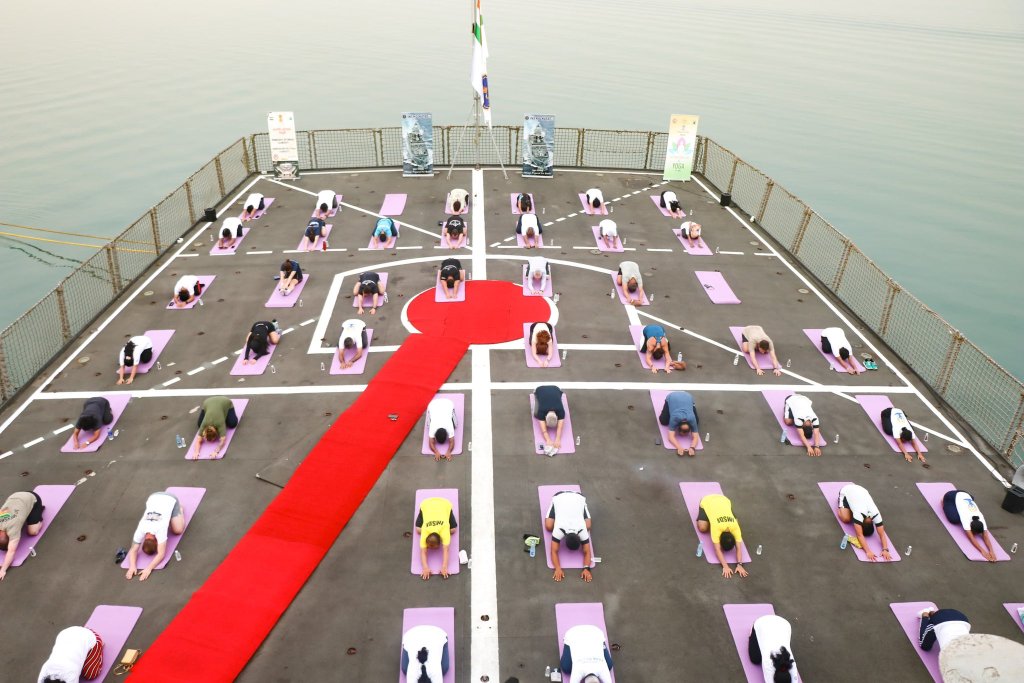
It is essential to recognise that the OPVs were primarily used for missile firings of the Dhanush missile system. These OPVs served a critical role in the early stages of India’s maritime nuclear deterrence by providing a platform to test and deploy the Dhanush missile.
They played a transitional role in maintaining a strategic presence until more advanced capabilities, such as nuclear-powered ballistic missile submarines (SSBNs), could be developed and deployed.
The decision to remove the Dhanush from the OPVs has been a natural progression in India’s strategic evolution. As India’s capabilities have advanced, the need for such transitional platforms has diminished, indicative of deterrence through more sophisticated and secure means. Subsequently, the ships were converted back to their primary role, including restoring aviation facilities from the ship’s deck.
Another aspect of the Indian Navy’s operations that has garnered attention is its integration of cultural practices, such as yoga, into its daily routines. The incorporation of yoga and other cultural activities into the navy’s routine is not just a matter of promoting wellness among personnel but also a strategic element of cultural diplomacy.
Yoga, an integral part of India’s cultural heritage, has been embraced globally as a practice that promotes physical and mental well-being. By integrating yoga into its operations, the Indian Navy is not only fostering the health and morale of its personnel but also projecting a soft power image that aligns with India’s broader diplomatic goals. The visibility of these practices on social media and other platforms enhances India’s image as a nation that values both strength and culture.
Critics, who argue that these activities reveal sensitive military information, oversimplify the complex nature of modern intelligence operations. The military agencies are fully aware of the importance of operational security, and the dissemination of such cultural practices is carefully managed to avoid compromising any strategic assets. The Indian Navy’s current trajectory reflects a thoughtful and deliberate approach to modernising its capabilities while maintaining a robust deterrence posture.
Moreover, cultural practices like yoga by the Armed Forces should be seen as a positive aspect of military soft power, contributing to the morale and well-being of its personnel while promoting India’s cultural heritage on the world stage.
Categories: Angled Right, Defence, Diplomacy


 Political.Capital