

By N. C. Bipindra
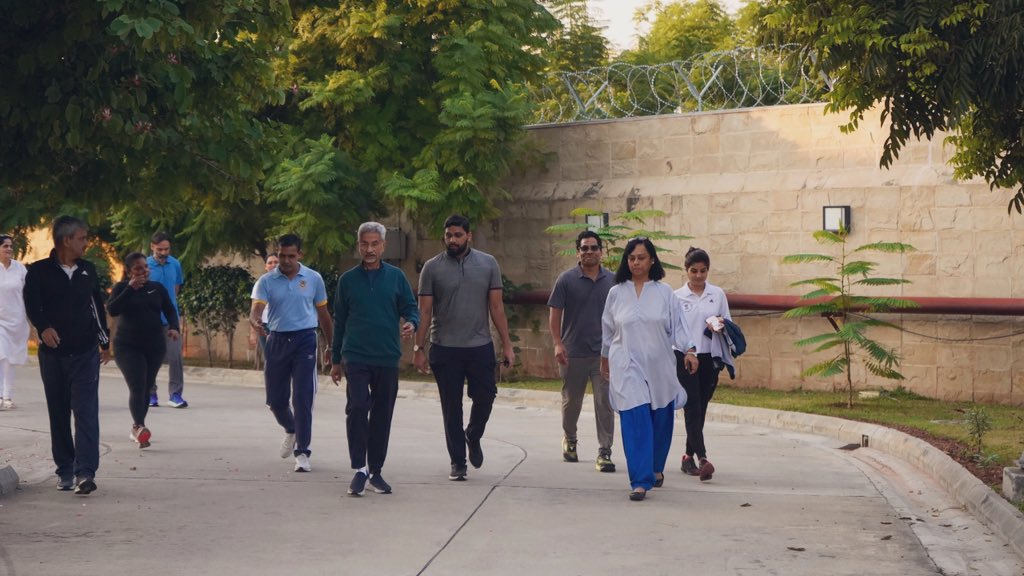
The everlasting image of the Shanghai Cooperation Organisation (SCO) summit held in Pakistan’s Islamabad on October 15 and 16, 2024, will be India’s External Affairs Minister Dr. S. Jaishankar on his morning walk inside the Indian High Commission campus, accompanied by Indian diplomats and staff members. At least, this is a memory that Indians will carry for a long time.
First, Jaishankar’s morning walk sends a clear message to the world. India and its political leadership care little for the epicenter of terrorism. Second, it also reaffirms Jaishankar’s “cool dude” image as India’s best spokesperson on international affairs.
This is not to trivialize the more serious message that Jaishankar delivered to the SCO Summit, standing for India’s Prime Minister Narendra Modi, who skipped the SCO summit on the principle of not engaging with a terror-promoting Pakistan that has pursued it as a state policy.
Pakistan may have miserably failed to achieve its former dictator General Zia-ul-Haq’s dream of dismembering India through a thousand cuts. But Pakistan-funded terror groups have indeed bled India through several terror strikes, including the Mumbai megalopolis attack in 2008, which did not draw any strong response from the then Manmohan Singh government, or the Uri and Pulwama hits.
The latter two attacks resulted in the 2015 surgical strikes and the 2019 Balakot air strikes by India, which effectively called Pakistan’s nuclear threshold bluff, and turned the nuke paradigm on its head. Remember, SCO has among its 10 members, four of the world’s nuclear-armed nations: Russia, China, India and Pakistan, though the latter two are not formally recognized as one under the Nuclear Non-Proliferation Treaty.
Pakistan has been a haven for global terrorists including the 9/11 mastermind Osama bin Laden. No wonder, Jaishankar’s message to the SCO Summit held in Islamabad was significant and critical over terrorism, separatism, and extremism.
Pakistan has encapsulated the dictionary definition of all the three undesirable traits for a nation that Jaishankar highlighted at the meeting. The world has recognized Pakistan as the hub of global terrorism, Islamabad epitomizes separatism by igniting fires in Kashmir and Punjab that have Hindus, Buddhists, and Jains as minority populations, and has promoted Islamic extremism the world over directly and through its proxies.
Notably, Communist China has been siding with terrorism, separatism, and extremism. Pakistan Prime Minister Shahbaz Sharif and Communist China Premier Li Qiang had a bilateral meeting in Islamabad on the sidelines, and the outcome statement from that meeting mentions Kashmir unimaginatively. Beijing insists that the world should uphold its ‘One China‘ policy, but it is unwilling to concede to the ‘One India‘ policy.
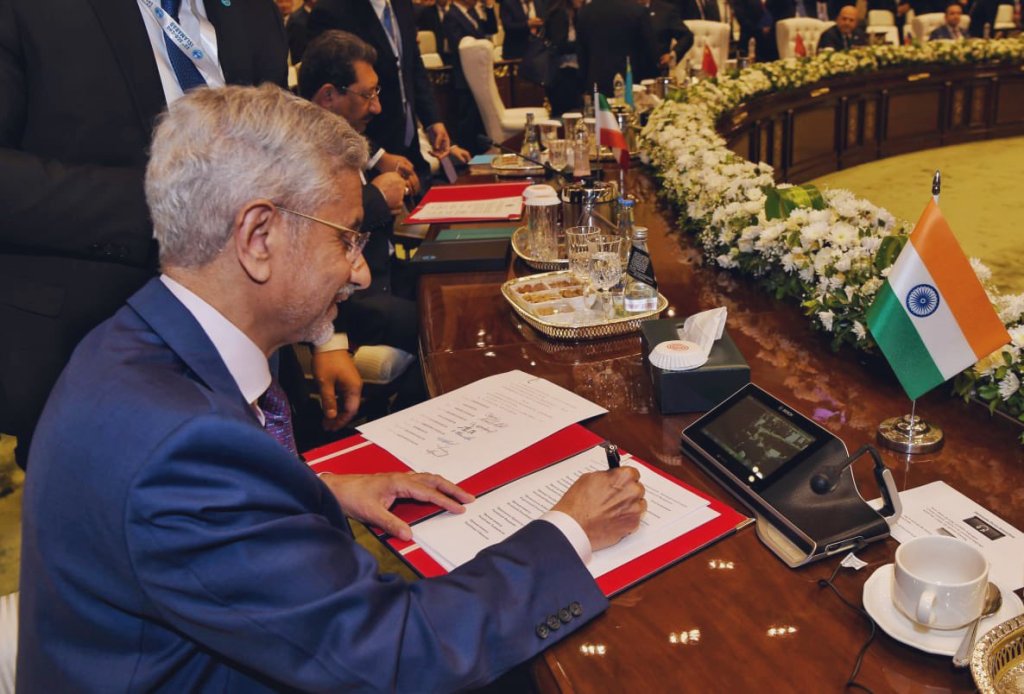
“If trust is lacking or cooperation inadequate if friendship has fallen short and good neighborliness is missing somewhere, there are surely reasons to introspect and causes to address. Equally, it is only when we reaffirm our commitment most sincerely to the Charter that we can fully realize the benefits of cooperation and integration that it envisages,” Jaishankar said at the meeting.
“The (SCO’s) objective is to strengthen mutual trust, friendship, and good neighborliness. It is to develop multi-faceted cooperation, especially of a regional nature. It is to be a positive force in terms of balanced growth, integration, and conflict prevention.”
Those words must have hit home where it was directed at: China and Pakistan, for all their unfriendly acts against India, their SCO partner.
“However, cooperation must be based on mutual respect and sovereign equality. It should recognize territorial integrity and sovereignty. It must be built on genuine partnerships, not unilateral agendas. It cannot progress if we cherry-pick global practices, especially of trade and transit.”
Obviously, the target here was the China-Pakistan Economic Corridor, a part of the China-driven Belt and Road Initiative (BRI) that uses debt diplomacy to trap poorer nations, and the cheap goods dumping practices of China through state subsidies for its industry.
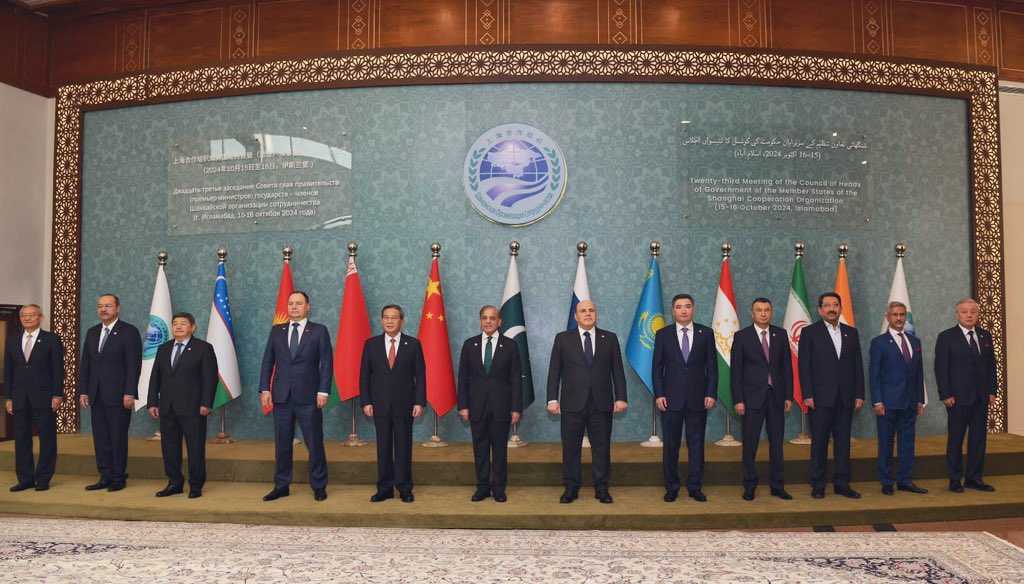
SCO is an important regional construct for India, though it was a conception of China to strengthen its presence and influence in Central Asia. India became a full member of SCO only in 2017, 16 years after it was formed in 2001. Jaishankar’s message to the 10-member grouping was powerful, asking them to have “an honest conversation” on what the SCO’s charter aimed for.
SCO brings India opportunities to pursue its Connect Central Asia policy and gain access to strategic resources such as minerals, including Uranium from Kazakhstan, apart from strengthening its energy security. India should also press for a robust SCO’s Regional Anti-Terrorist Structure for key information and intelligence sharing on terrorism and drug running.
Yet, challenges remain for India in the SCO due to the grouping being perceived as an anti-West architecture. India faces military and diplomatic conflicts with China and Pakistan and that is an SCO spoiler.
India should push for enhancing the role of observer nations and dialogue partners, apart from SCO’s engagement with other international and regional formations. India should also pursue Hindi as an official language of SCO.
India is a citizen-focused technology powerhouse through its digital payments interface and digital inclusiveness, which it can share with other SCO nations for their benefit. India has also been successful in implementing the SCO Startup Forum, SWG on Startups, and Innovation and Traditional Medicine. India can also share its Mission LiFE to achieve UNSDGs as an SCO objective.
Jaishankar’s morning walk in Islamabad is an amiable symbolism that India can walk its talk on its commitment of friendship with Central Asia nations, and its half-a-century-long strategic partner Russia, a key member of the SCO.
China and Pakistan can take a walk.
(The article was first published by the Centre for Integrated and Holistic Studies, Delhi)
Categories: Diplomacy, Geopolitics, Politics


 Political.Capital