

By N. C. Bipindra
Since the establishment of Pakistan in 1947, Balochistan has endured recurrent episodes of political unrest and armed rebellion.
Ethnic Baloch factions have historically advocated for greater autonomy and control over the province’s extensive natural resources, and in certain instances, complete sovereignty.
Notwithstanding its status as the largest province and the location of Pakistan’s most substantial reserves of natural gas and other critical resources, Balochistan continues to be the most impoverished area within the nation.
The region exhibits the lowest literacy and employment rates nationally, healthcare access remains severely restricted, and the life expectancy is among the lowest, thus exacerbating a profound sense of marginalisation.
Although the phenomenon of enforced disappearance in Pakistan can be traced back to at least the 1970s, its methodical application intensified in the early 2000s, coinciding with Pakistan’s engagement in the U.S.-led “war on terror.”
Security apparatuses increasingly resorted to the abduction of individuals suspected of associations with militancy, frequently without formal charges or adherence to due process.

2000s: Crackdown and Kill-and-Dump Operations
Under General Pervez Musharraf (1999–2008), assassination attempts in Balochistan and the killing of tribal leader Nawab Akbar Khan Bugti in 2006 triggered a brutal crackdown on nationalist movements.
Enforced disappearances and extrajudicial killings became entrenched counterinsurgency tactics, a trend that deepened after the 2009 assassinations of three Baloch politicians in Turbat.
By 2009–2010, abductions of activists, doctors, and civilians followed a recurring pattern: armed men in plain clothes, police inaction, court orders ignored, and families left in limbo.
Victims often reappeared as mutilated bodies in public spaces, the so-called “kill-and-dump” operations that soon became a grim hallmark of the conflict.
2011–2021: Expansion and Nationwide Spread
From 2011 onwards, bodies of the disappeared began appearing more regularly in urban and remote areas.
Human rights organisations documented hundreds of cases, implicating intelligence agencies, the Frontier Corps, and local police.
The Commission of Inquiry on Enforced Disappearances (COIED), established in 2011, faced criticism for its lack of transparency and failure to hold perpetrators accountable.
By 2013–2015, abductions extended to teachers, journalists, students, and lawyers; by 2016–2017, bloggers, academics, and human rights activists in Punjab, Sindh, and Islamabad were similarly targeted.
Despite repeated court petitions, arrests remained rare, intimidation persisted, and extrajudicial kill-and-dump operations continued, deepening fear and distrust among affected communities.
2022: Nishtar Hospital Scandal
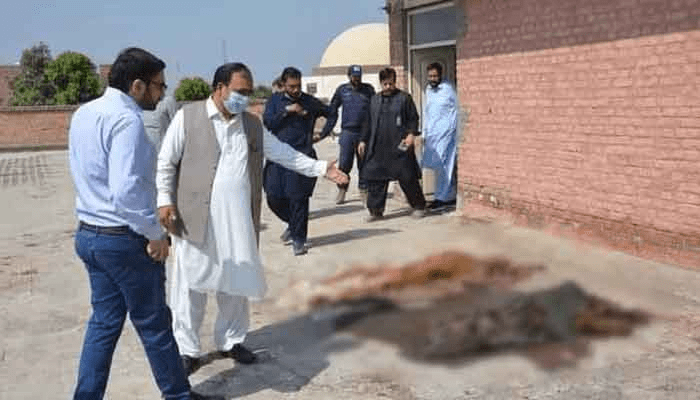
In 2022, a particularly alarming incident occurred at Multan’s Nishtar Medical Hospital, which became the epicenter of a nationwide outcry following the discovery of decomposed remains abandoned on its rooftop.
This occurrence unveiled glaring negligence regarding the management of unclaimed corpses, many of which may have been linked to historical cases of enforced disappearances.
In a swift response, the Punjab government constituted a six-member investigative committee and proceeded to suspend various hospital officials, including the head of the anatomy department.
Authorities asserted that the remains were earmarked for medical education; however, the lack of appropriate documentation, identification, and adherence to ethical protocols provoked significant public ire.
Moreover, this scandal underscored pressing inquiries concerning accountability, systemic deficiencies in institutional oversight, and the wider implications of extrajudicial killings and disappearances in the context of Pakistan.
Discovery and Initial Response
The revelations came to light when Punjab CM’s Adviser, Chaudhry Zaman Gujjar, acting on a whistleblower’s tip, forced entry into the hospital mortuary after staff initially resisted.
Inside, he reported seeing dozens of decomposed bodies, men and women alike, many unclothed, strewn across the rooftop and locked rooms.
He described the situation as vultures and worms scavenging on corpses and recalled finding two bodies in the early stages of decomposition, crawling with maggots.
His tally suggested at least 35 bodies were on the rooftop, while other accounts estimated far higher, with numbers ranging from dozens to over 200.
The grisly scenes fueled suspicions of systemic malpractice and cover-ups.
Hospital’s Explanation and Morgue Conditions
Hospital officials attempted to explain that the corpses were unclaimed bodies handed over by police for postmortems and, in some cases, medical education.
The head of the Anatomy Department, Dr. Maryam Ashraf, defended the practice by stating that badly decomposed bodies could not be preserved in freezers and were therefore placed in “airy rooms” on the roof until bones could be retrieved for teaching.
She insisted that the remains were later buried properly, with “no issue of disrespect.”
Yet sources within the hospital contradicted this defence, pointing instead to chronic infrastructural collapse.
Of the five mortuary freezers, only one was functioning, leaving space for just seven or eight bodies instead of the intended forty.
As a result, two additional rooms above the mortuary were filled with decomposing corpses, further overwhelming the system.
Contradictions, Negligence, and Human Rights Concerns
The Nishtar Hospital scandal revealed stark contradictions between police and hospital accounts, exposing systemic negligence.
Police claimed that bodies were submitted under Section 174 of the Pakistan Penal Code, with efforts made to identify them through public notices.
Unclaimed bodies, they argued, were supposed to be buried promptly, often with assistance from welfare organisations such as Edhi.
In other cities, such as Karachi, unclaimed bodies are typically interred within 48–72 hours.
The situation in Multan, where dozens of decomposed corpses were abandoned on a hospital rooftop, represented a clear violation of both legal and ethical norms.
While government authorities framed the incident as a case of medical negligence, human rights groups highlighted its far-reaching, grave implications.
The Human Rights Council of Balochistan (HRCB) warned that some of the bodies could belong to victims of enforced disappearances, recalling mass graves in Tootak, Balochistan, uncovered in 2014.
The Baloch American Congress (BAC) described the episode as a “crime against humanity” and called upon international organisations such as the ICRC to conduct DNA testing and establish identities.
Activists from the Baloch National Movement alleged that at least 238 bodies were recovered, pointing to remnants of clothing as evidence that some belonged to Baloch individuals.
Beyond procedural failings, the scandal exposed profound institutional decay: insufficient morgue infrastructure, disregard for medical ethics, lack of transparency in handling unclaimed bodies, and absence of accountability.
For families of the disappeared, the discovery intensified anguish, raising fears that even in death, their loved ones were denied dignity, identity, and justice.
Despite widespread calls for forensic investigation and transparent inquiry, the Nishtar episode risks following the trajectory of earlier grave discoveries; politicised, poorly investigated, and ultimately consigned to bureaucratic silence.
Conclusion: Nishtar Hospital, Balochistan, and the Machinery of Disappearance
The Nishtar Hospital scandal reflects Pakistan’s entrenched culture of impunity surrounding death, disappearance, and the treatment of human remains.
The abandoned, decomposed bodies resonate far beyond Multan, particularly in Balochistan, where thousands have disappeared over the past two decades.
The incident evokes memories of mass graves in Tootak and the countless “kill-and-dump” operations that have left Baloch communities in grief and fear.
By treating human bodies as disposable, state institutions perpetuate a cycle of erasure.
The scandal highlights that enforced disappearances and extrajudicial killings are systemic tools of counterinsurgency, with the military and intelligence agencies largely beyond accountability.
Nishtar is, therefore, more than a medical ethics lapse. It symbolises institutionalised dehumanisation, secrecy, and bureaucratic neglect.
Without independent investigations and forensic identification, the fate of the disappeared remains unresolved, and incidents like Nishtar continue as stark reminders of Pakistan’s accountability crisis.
Nishtar was not just a hospital scandal; it was a rooftop graveyard that revealed how the disappeared of Pakistan continue to haunt the living.
Note: October 13th is the Nishtar Hospital tragedy day, when hundreds of unclaimed bodies of Baloch youth were unearthed, and it caused an uproar over unexplained disappearances in Pakistan, against the background of the Balochistan independence movement.
Categories: Human Rights, Top News


 Political.Capital