

By N. C. Bipindra
Chinese Checkers, a popular strategy board game, has much in common with the situation in the South China Sea (SCS), arguably the most disputed maritime region in the world. Chinese checkers originated in Germany and gained its present name as part of a rebranding scheme in the United States of America. [1]
Similarly, the South China Sea (SCS), known historically by many names such as ‘Nan Hai’ (South Sea) in China, East Sea by Vietnam, and Champa Sea in Southeast Asia, was referred to as ‘Chinese’ Sea by Portuguese seafarers who considered it as the access route to China for trade. [2] The term ‘South China Sea’ was subsequently formalized by IHO. [3]
Chinese Checkers is played by hopping over own or the opponent’s adjacent marbles to reach and capture the opponent’s area across the board finally. Similarly, the Chinese have been aggressively addressing the territories such as Taiwan and maritime areas of SCS of other countries in the region.
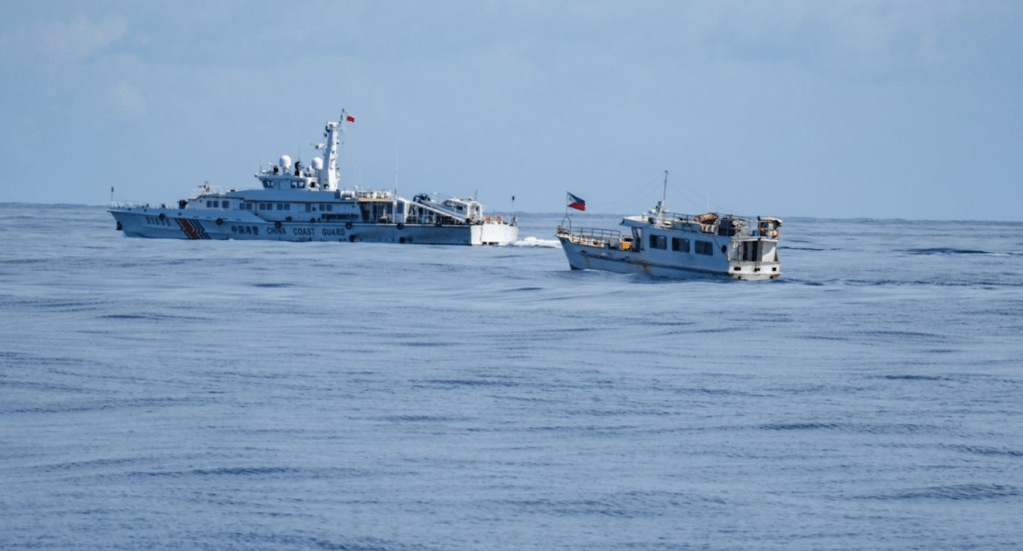
China is following the strategy of gradual but surefooted escalation to consolidate maritime claims in SCS. Despite no recognized legal standing of the so-called nine-dash [4] (now ten-dash line [5]) in international law or acceptance by global and regional stakeholders, the Chinese have been behaving in an increasingly belligerent manner to assert their claims in the disputed maritime area.
The aggressive assertiveness of the Chinese in SCS needs to be addressed effectively, and urgently, not just for regional stability, but also to preserve global peace and promote rule-based order.
Countries of South East Asia with rival claims in SCS have sincerely and constructively engaged with China to ensure peace and stability in the region. However, initiatives such as the Declaration on Conduct of Parties in the SCS (DOC), guidelines for its implementation, and efforts to forge consensus on a binding Code of Conduct to prevent conflict, manage crisis, and facilitate cooperation are being regularly challenged by an increasingly assertive and belligerent China. [6]
Chinese infrastructure development in the disputed islands and reefs, harassment of the fishermen of other countries by its maritime militia, aggressive and dangerous maneuvers, and intimidation of other regional navies by the Chinese Navy and Coast Guard ships are making the situation more volatile and dangerous with every passing day.
The lack of consensus among ASEAN states to deal with Chinese aggressive actions in the region, and their increasing economic dependence on China, is emboldening the Chinese to continue unabashedly with their hegemonic ambitions in the region.
The United States, which is embroiled in managing conflicts such as Israel-Hamas and Russia-Ukraine does not want to escalate its opposition and add another issue to its list of geo-political woes.
China’s increasingly assertive and belligerent attitude towards international law is evident in its vehement refusal to recognize the 2016 UN tribunal ruling on the SCS dispute. [7] China has adopted intimidating tactics which include militarisation and coercive measures to bolster its claims in the region.
These activities undermine the spirit of dialogue, cooperation, promotion of regional stability, freedom of navigation, and peaceful resolution of disputes envisaged in the aspirational SCS Code of Conduct being pursued by ASEAN nations. China does pay lip service to the importance of dialogue and peaceful resolution.
However, China’s unilateral actions are starkly contrasting with its stated commitment to a peaceful resolution of the SCS dispute. These include recent legislation permitting the Chinese Coast Guard to detain vessels in disputed areas in SCS claimed by China [8] and close-quarter intimidating maneuvers by the Chinese Coast Guard [9] and militia vessels with ships of other countries in the SCS.
China has also resorted to coercive measures such as the use of water cannons to expel vessels of other countries [10] and collision by Chinese Coast Guard ships with ships of other nations [11] in the area.
China has been trying to browbeat ASEAN nations into including provisions favorable to its position in SCS. These provisions are practically tantamount to negating freedom of navigation for all traffic in SCS except on terms and conditions dictated by China.
Utilizing ambiguity to its advantage, China has been reluctant to accept a legally binding status advocated by ASEAN for the proposed Code of Conduct in the South China Sea. [12]
The increasingly belligerent attitude and activities by China are not just a threat to regional stability in SCS but also serve as a sinister warning to the entire democratic world, as well as other smaller countries about the true nature of the Chinese vision of a ‘shared future for the entire mankind.’ [13]
The large-scale military exercises, dubbed Joint Sword – 2024A [14], conducted around Taiwan in the wake of the inauguration of the democratically elected President of Taiwan, Lai Ching-Te, are strong pieces of evidence of China’s strong distaste and disregard for democratic practices.
These drills involved 111 aircraft, and 46 naval vessels, and allegedly aimed to test the Chinese military’s actual combat capabilities. The exercises included multiple joint sea-air combat-readiness patrols, precision strikes, and simulated blockades.
Such provocative military drills cannot be the choice of a responsible power looking forward to promoting regional stability, cooperation, and coexistence. Notably, 82 aircraft crossed the median line of the Taiwan Strait, escalating tensions and provoking strong reactions from Taiwan.
Taiwan responded by mobilizing its military assets for increased surveillance and defensive measures and condemned the Chinese provocation and intimidation. [15]
However, the response from ASEAN countries and the rest of the world to Chinese actions that blatantly threaten regional peace and stability was almost muted and guarded at best.
The scenario reminds us of the appeasements accorded to Nazi Germany in the run-up to the Second World War with devastating consequences. Actions by China do depict its vision for the ‘shared future for entire mankind,’ [16] albeit in Chinese terms and conditions. It is the ‘future’ of a non-democratic, hegemonistic, oppressive, and exploitative world order dictated by China.
The Chinese regime draws its strength from its economic clout. This was facilitated by the proactive engagement of the rest of the world with China. In this process, it has flooded the world’s markets with cheap Chinese products to meet the ever-increasing needs of consumers in both developed and developing economies.
The Chinese have used their economic clout to pursue debt-trap diplomacy and bully smaller nations into submission by creating critical one-sided trade and economic dependencies.
The recent enactment of Chinese Coast Guard Regulation 3 is yet another blatant disregard to rule-based order in global commons. The Regulation is in direct contravention of UNCLOS to which China is a signatory and has ratified.
The newly enacted regulation was brought into force on June 15, 2024, which authorizes detention of foreign individuals and vessels for up to 60 days wherein the use of force is permitted if needed.
The CCGR 3 is applicable in ‘Waters under the jurisdiction of China,’ a term not synonymous with any internationally accepted terminology to define areas at sea. By the extension of this regulation, the Chinese Coast Guard is now authorized to detain a warship or other vessels with sovereign immunity which contradicts the globally accepted and ratified norms.
China has used its comprehensive national power to increase its influence in the Indo-Pacific region. These predatory practices of China conform to its hegemonic ambitions. Sustained diplomatic efforts, adherence to international law, and a global collective security approach offer a pathway to resolving the disputes in the South China Sea and beyond.
The success of these efforts will depend on the collective will of the claimant countries, and the international community, to foster a cooperative and rules-based global order. It is essential to check the Chinese before they reach the other end of the board in this game of geo-political Chinese Checkers for the freedom and greater good of the ‘whole community of mankind’ and not just that which is ‘shared’ with China.
References:
[1] “Explore Chinese Checkers: The Classic Strategy Game – OCF Chess.” Accessed June 6, 2024. https://ocfchess.org/what-is-chinese-checkers-game/.
[2] Tønnesson, Stein (2005). “Locating the South China Sea”. In Kratoska, Paul H.; Raben, Remco; Nordholt, Henk Schulte (eds.). Locating Southeast Asia: Geographies of Knowledge and Politics of Space. Singapore University Press. p. 204. ISBN 9971-69-288-0.
[3] IHO. (2024, June 06). Limits of Oceans and Seas, Special Publication 23, 3rd edition, 1953. Retrieved from web.archive.org: https://web.archive.org/web/20140407060601/http://www.iho.int/iho_pubs/standard/S-23/S-23_Ed3_1953_EN.pdf
[4] https://www.cfr.org/councilofcouncils/global-memos/hague-tribunals-south-china-sea-ruling-empty-provocation-or-slow-burning-influence, Accessed June 10, 2024
[5] https://www.eurasiareview.com/20092023-chinas-ten-dash-line-deciphering-disputes-in-south-china-sea-analysis/, Accessed June 9, 2024
[6] https://www.wilsoncenter.org/blog-post/whats-behind-new-china-asean-south-china-sea-code-conduct-talk-guidelines, Accessed June 12, 2024
[7] https://www.straitstimes.com/asia/east-asia/china-dismisses-hague-ruling-maintains-sovereignty-over-south-china-sea, Accessed June 12, 2024
[8] https://www.straitstimes.com/asia/east-asia/china-s-new-rules-allow-detention-of-foreigners-in-south-china-sea, Accessed June 14, 2024
[9] https://www.bbc.com/news/world-asia-65421115, Accessed June 15, 2024
[10] https://thediplomat.com/2024/05/china-coast-guard-again-fires-water-cannons-at-philippine-vessels-near-disputed-shoal/, Accessed June 16, 2024
[11] https://www.telegraphindia.com/world/philippine-ship-collides-with-chinese-vessel-in-south-china-sea-dws/cid/2027658, Accessed June 19, 2024
[12] https://asiatimes.com/2023/04/compromises-necessary-for-code-of-conduct-in-s-china-sea/, Accessed June 12, 2024
[13] Nathan, A. J., & Zhang, B. (2021). ‘A Shared Future for Mankind’: Rhetoric and Reality in Chinese Foreign Policy under Xi Jinping. Journal of Contemporary China, 31(133), 57–71. https://doi.org/10.1080/10670564.2021.1926091, Accessed June 15, 2024
[14] https://chinapower.csis.org/china-respond-inauguration-taiwan-william-lai-joint-sword-2024a-military-exercise/, Accessed June 17, 2024
[15] https://news.usni.org/2024/05/24/japan-to-join-u-s-in-valiant-shield-exercise-china-continues-military-drills-near-taiwan, Accessed June 16, 2024
[16] https://news.cgtn.com/news/2021-07-19/What-building-a-community-of-a-shared-future-to-bring-to-the-world–11ZSAqh6wcU/index.html, Accessed June 17, 2024
Categories: Defence, Diplomacy, Geopolitics


 Political.Capital